
At a glance
- Rub the piece on a touchstone to leave two or three solid lines.
- Put 10K acid on the first line. If it stays, the piece is at least 10K.
- Put 14K acid on the next. If that line dissolves, the piece is 10K. Keep stepping up.
- The highest acid a line survives is the karat you price on.
- The acids burn skin and eyes. Wear gloves and eye protection every time.
Safety first
Gold testing acids are strong acids, mostly nitric acid. They burn and stain skin, ruin clothes, and are dangerous in your eyes.
- Wear gloves and eye protection every time.
- Work with good ventilation and keep your face away from open bottles.
- Keep the caps on and the bottles upright, out of reach of children.
- Keep water and baking soda nearby. If acid touches your skin, rinse it with plenty of water straight away. If it gets in your eyes, rinse for at least 15 minutes and get medical help.
What you need
- A touchstone: a piece of black slate or similar fine stone made for testing.
- Gold testing acids: 10K, 14K and 18K. Many kits also include 22K and a silver acid.
- A known reference piece if you have one, such as a scrap of 14K you’ve already tested.
- Paper towels and water to clean the stone. Follow the stone maker’s directions.
- A small file, used only with the owner’s OK (see step 2).
As an Amazon Associate I earn from qualifying purchases. On Amazon: the PuriTEST 10K, 14K and 18K kit (paid link), which includes a test stone, the PuriTEST six-solution kit (paid link) with 22K, silver and platinum acids, a ValueMax needle file set (paid link) and 3M GoggleGear 500 splash goggles (paid link). The full list is in the gold buyer’s kit.
How to do the acid test
- Start with a clean stone. Clean and dry it, so old lines can’t confuse you.
- Check under the surface. Plating can be thick enough to pass on the stone. With the owner’s OK, file a tiny notch somewhere it won’t show and put a drop of 10K acid in it. A green or fizzing reaction means base metal under the surface.
- Rub the piece on the stone. Press firmly and rub back and forth to leave a solid line of metal, not a faint scratch. Make two or three lines side by side with space between them.
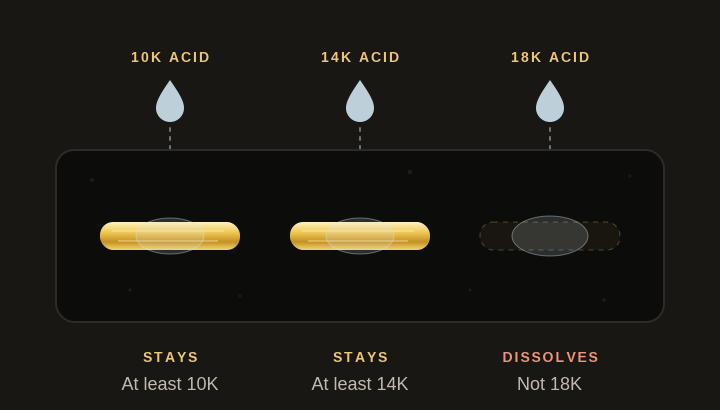
- Put 10K acid on the first line. If the line stays, the piece is at least 10K. If it disappears, the piece is below 10K or isn’t gold, and you stop there.
- Put 14K acid on the second line. If it stays, the piece is at least 14K. If it dissolves, the piece is 10K.
- Keep stepping up. Put 18K acid on the third line, and so on. The first acid that dissolves the line tells you where to stop. The one before it is the karat.
- Watch closely and compare. Watch the line for several seconds after the drop goes on. A line that fades slowly instead of vanishing often means the piece sits between two karats, so price it on the lower one. If you have a known 14K piece, rub it next to the test line and compare how the two react.
- Clean the stone between pieces. Wipe the acid off, rinse and dry the stone before the next test.
Reading the results
| 10K acid | 14K acid | 18K acid | Result |
|---|---|---|---|
| Dissolves | – | – | Below 10K, or not gold |
| Stays | Dissolves | – | 10K |
| Stays | Stays | Dissolves | 14K |
| Stays | Stays | Stays | 18K or higher. Go on to 22K acid. |
Once you know the karat, weigh the piece and work out its melt value with the scrap gold calculator.
White gold, plated pieces and silver
- White gold tests like yellow gold. It’s often rhodium-plated, so rub a little harder to get a true line.
- Plated and filled pieces can test as karat gold on the surface. That’s why you check under the surface first and read the whole stamp.
- Silver needs silver testing acid and the color chart that comes with it. See the sterling silver guide.
Mistakes new buyers make
- Rushing the test. A quick drop and a glance is how plated pieces get bought as gold. Take your time.
- A faint line. A thin scratch can vanish under any acid and fool you. Rub a solid line.
- Testing only the surface of a piece that could be plated.
- A dirty stone, with old lines and acid left over from the last piece.
- Old acid. Acids weaken over time. Check them against a known piece, and replace them when they stop behaving.
- Testing only the clasp, or only the part with the stamp.
- Skipping the gloves.
Checks on checks. Every piece gets the magnet, a close look at the stamp and an acid test before you pay for it. Most money at the counter is lost by rushing, not by bad luck.