
At a glance
- 10K is 417, 14K is 585 and 18K is 750. The number is gold in parts per thousand.
- Look at how the stamp sits in the metal, not only at what it says. A thin, scratchy, etched-looking stamp is a red flag.
- GF, RGP, GP, GEP and HGE mean filled or plated, even with “14K” next to them.
- If it doesn’t plainly say something like 14K or 585, be suspicious.
- A stamp is a claim, not proof. Test every piece.
What the karat numbers mean
Karats measure purity in 24ths, so 14K is 14 parts gold out of 24. The three-digit stamps used in Europe and on a lot of modern jewelry say the same thing in parts per thousand: 585 means 58.5% gold.
| Karat | Gold content | Stamps you’ll see |
|---|---|---|
| 9K | 37.5% | 9K, 9CT, 375 |
| 10K | 41.7% | 10K, 10KT, 417 |
| 14K | 58.3% | 14K, 14KT, 585 |
| 18K | 75% | 18K, 18KT, 750 |
| 22K | 91.7% | 22K, 916 |
| 24K | 99.9% | 24K, 999 |
585 is a little above 14/24 (58.3%). Pick the figure you price on and stick with it. In the scrap gold calculator you can choose “Other purity” and enter the stamp exactly. In the US, 10K is the lowest purity that can be sold as karat gold, so a lower stamp is unusual on American pieces.
Where to find the stamp
- Rings: inside the band.
- Chains and bracelets: on the clasp, or on a small tag next to it.
- Earrings: on the post or the back.
- Pendants: on the bail (the loop the chain runs through) or on the back.
- Watches: inside the case back.
Use a 10x loupe and good light. Stamps wear down, and a worn stamp is hard to read with the naked eye.
As an Amazon Associate I earn from qualifying purchases. On Amazon: the SE 10× LED loupe (paid link) or the Nikon 10× jewelry loupe (paid link). The full list is in the gold buyer’s kit.
A stamp only covers the part it’s on. A gold clasp can be fitted to a chain that isn’t gold. Check and test the chain itself, not just the part with the stamp.
How a real stamp should look
Don’t just read the stamp. Get in close and look at how it sits in the piece. A proper stamp is pressed into the metal: the letters are crisp, evenly deep and lined up, with clean edges.
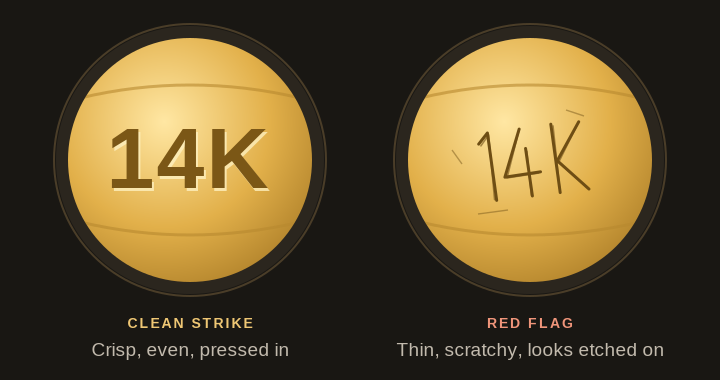
Red flags to look for:
- Letters that look scratched, etched or engraved on by hand.
- A stamp that’s crooked, shallow or uneven.
- A sharp, fresh-looking stamp on a piece that’s worn everywhere else.
- A stamp on a part that could have been added later, such as a clasp or a jump ring.
Marks that look good but aren’t solid gold
There are a lot of hallmarks that look official but mean the gold is only a layer on the outside. These are the ones you’ll see most:
| Mark | What it means |
|---|---|
| GF 1/20 14K GF 1/10 12K GF | Gold-filled. A layer of gold bonded over a base metal, usually brass. “1/20” means the gold layer is one twentieth of the piece’s weight. |
| RGP 1/40 10K RGP | Rolled gold plate. The same idea as gold-filled, with a thinner layer. |
| GP, GEP | Gold plated, gold electroplate. A very thin coat over base metal. |
| HGE, HGP | Heavy gold electroplate. Still plating, just a thicker coat. |
| 14K HGE 18K GP | A karat number next to a plating mark gives the karat of the plating, not of the piece. |
| 925 or STERLING on a gold-colored piece | Gold-plated silver, often sold as vermeil. Price it as silver. |
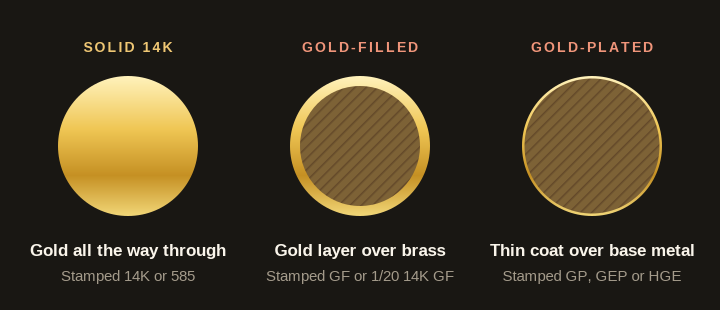
Read the whole stamp. New buyers see “14K” and stop reading, but the letters after it are what tell you it’s plated or filled.
When the stamp is unclear or missing
If it doesn’t plainly say something like 14K or 585, put your antennas up. Look for reasons not to buy, and stay on the safe side.
- No stamp: some older or repaired pieces have none, or it was cut away when a ring was resized. That doesn’t make a piece fake, but everything then rests on your tests. Price it on what the acid shows, never higher.
- A worn or partial stamp: don’t guess the missing letters.
- A mark you don’t recognize: treat the piece as unstamped until you’ve tested it.
A stamp is a claim, not proof
A stamp can be faked as easily as the metal. Every piece gets the full set of checks: the magnet test first, then the stamp, then the acid test. Take your time and do every check properly.
Checks on checks. Every piece gets the magnet, a close look at the stamp and an acid test before you pay for it. Most money at the counter is lost by rushing, not by bad luck.